
Coconuts > Processed Fruit
27 Entries
Tuvaluan
日本語/English
Notes
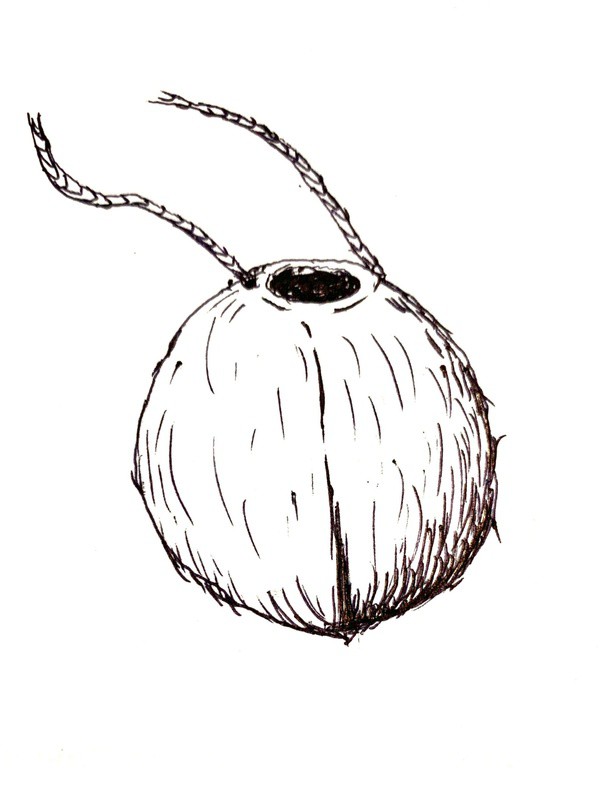
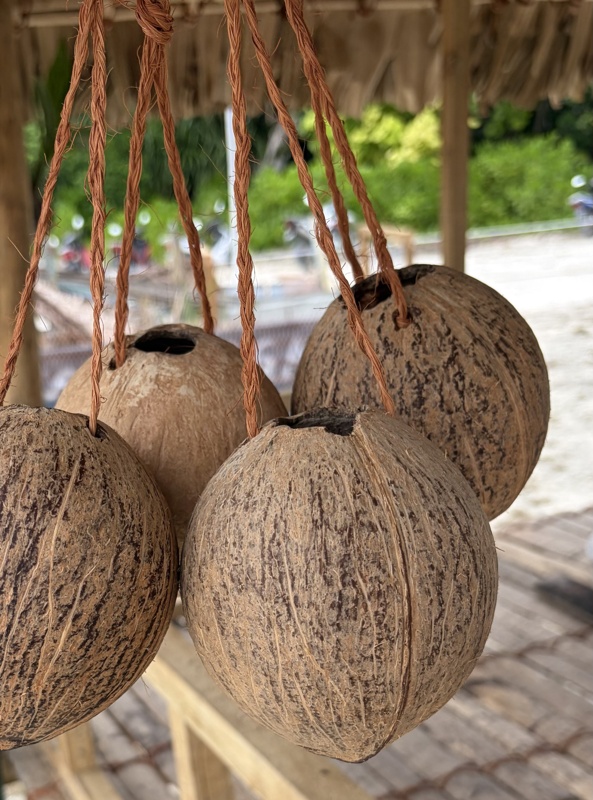
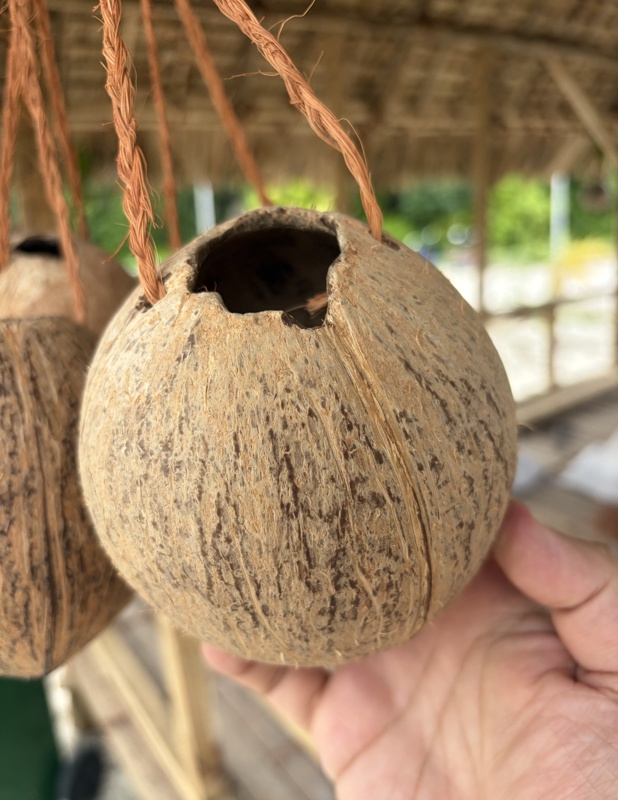
pūpū kaleve
n.
coconut shell used for collecting coconut sap
名
ヤシ汁を採るために使われるココナツの殻
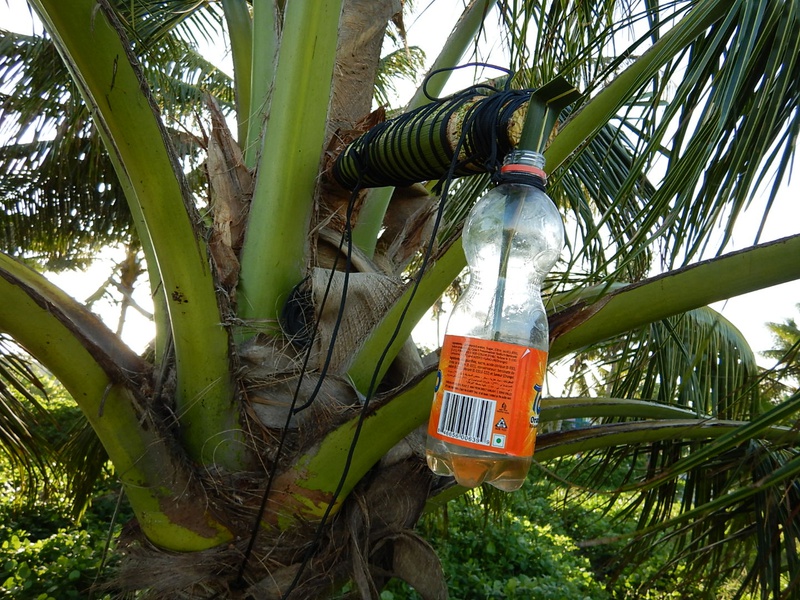
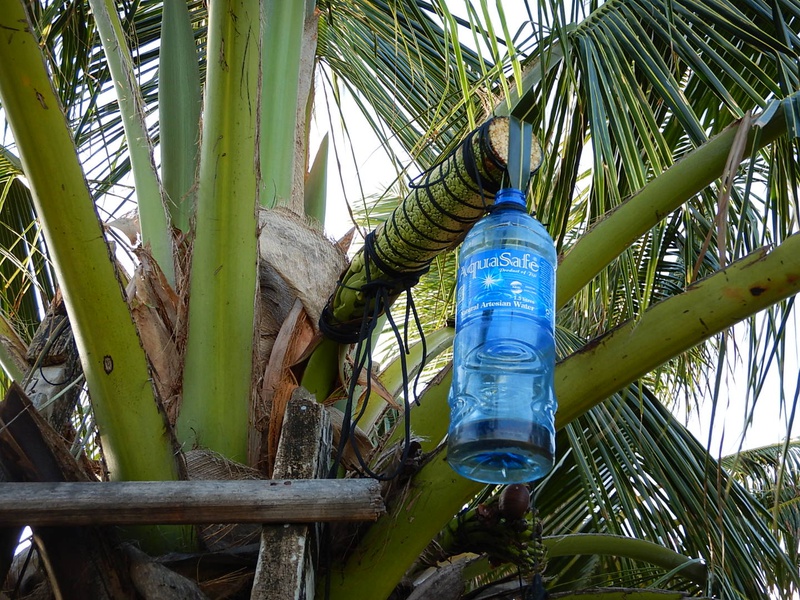
After the husk is removed, a round hole is made in the upper part of the shell, and the flesh is removed to form a container. A cord (kolokolo) is threaded through it, and the container is hung from the coconut palm spathe (taume) to collect the sap. Nowadays, plastic bottles or glass bottles are commonly used instead, and pūpū kaleve is rarely seen. See also: kao kaleve, ipu kaleve.
外果皮を剥いた後,内果皮の上部に丸く穴をあけ,中の果肉を取り除いて容器状にし,縄紐(kolokolo)を通してココヤシの苞(taume)に吊るしておく.現在ではペットボトルやガラス瓶で代用することが多く,ほとんど見かけない.[参] kao kaleve, ipu kaleve.
n.
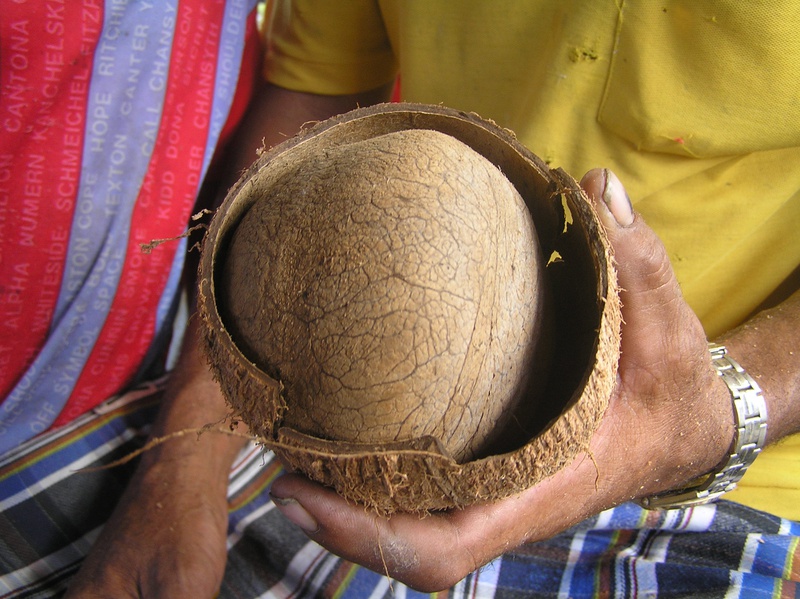
copra (the dried endosperm of the coconut fruit)
名
コプラ(ココナツの胚乳を乾燥させたもの)
n.
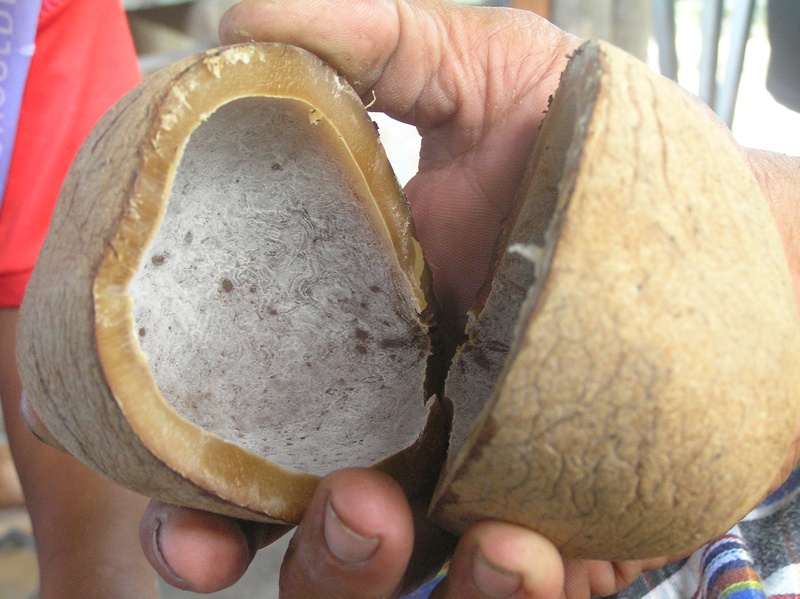
copra (the dried endosperm of the coconut fruit)
名
コプラ(ココナツの胚乳を乾燥させたもの)
malala
n.
charcoal made of coconut shells
名
ココナツの殻の木炭